Updating our Growth Plan: City of Regina Official Community Plan

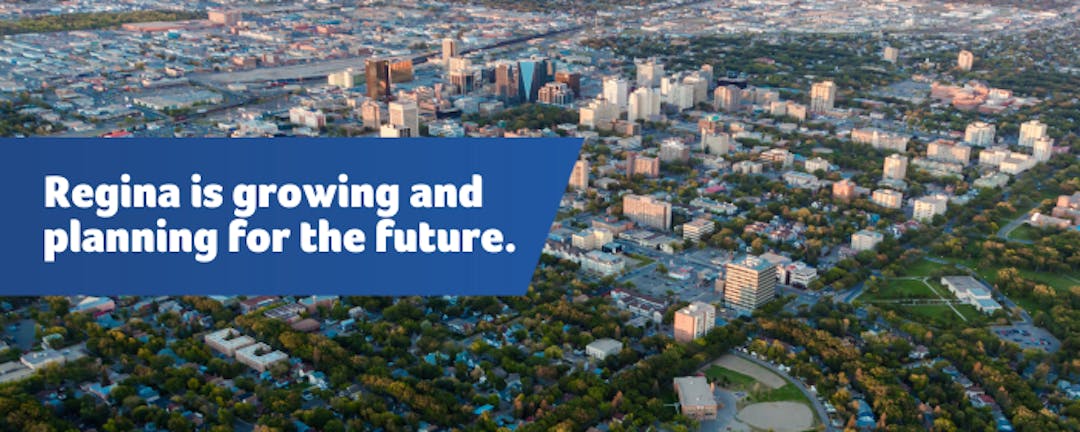
Regina is growing and planning for the future. Aerial photo of Regina's downtown, warehouse and nearby neighbourhoods.

The City of Regina is updating the current Growth Plan. Regina is growing faster and differently than projected when the Official Community Plan (OCP) was first introduced in 2013. By 2051, Regina is projected to reach a population of 370,000. To prepare for this growth, the City is reviewing and updating its Growth Plan to:

  • Identify new areas for housing, employment and industrial development.
  • Support revitalization and redevelopment in existing neighbourhoods.
  • Align infrastructure and servicing needs with long-term growth.
  • Respond to evolving social, economic and environmental trends.

The Official Community Plan Growth Plan Review is a key initiative to guide future development, infrastructure and investment, ensuring Regina remains vibrant, inclusive and sustainable.

The City of Regina is updating the current Growth Plan. Regina is growing faster and differently than projected when the Official Community Plan (OCP) was first introduced in 2013. By 2051, Regina is projected to reach a population of 370,000. To prepare for this growth, the City is reviewing and updating its Growth Plan to:

  • Identify new areas for housing, employment and industrial development.
  • Support revitalization and redevelopment in existing neighbourhoods.
  • Align infrastructure and servicing needs with long-term growth.
  • Respond to evolving social, economic and environmental trends.

The Official Community Plan Growth Plan Review is a key initiative to guide future development, infrastructure and investment, ensuring Regina remains vibrant, inclusive and sustainable.

Updating Growth Plan Questions & Answers

If you have any questions about the Growth Plan Review or any of the technical documents posted on this page, you can ask them here until March 31, 2026.

Email
loader image
Didn't receive confirmation?
Seems like you are already registered, please provide the password. Forgot your password? Create a new one now.
  • Can you please share the data source from where your information is based of? If you use data from invalid source, you get incorrect results. Incorrect results lead to incorrect projections. We are not going to pay for your dreamy day dreams.

    Keyur Patel asked 2 months ago

    The population growth forecasts that are being used to help inform the Growth Plan Review project come from the City's recent Population, Housing and Employment Forecast and Urban Land Needs Study (Watson Economists, 2024). This study includes a defined methodology for the forecasts based on the consultant's best practices. A copy of this study can be found under the 'Documents" tab on the Growth Plan Review Be Heard page.

  • In the City of Regina's 2013 OCP - there is a great deal of lanuage about how important culture is the sustainable development. Will the new OCP ensure that the manufactured homes will reflect the culture of the 30 community association in Regina?

    324katepwa asked 3 months ago

    Manufactured homes need to meet all zoning regulations prior to the approval of any development and building permits. With some exceptional areas, the Zoning Bylaw does not regulate aesthetics or specific architectural styles of buildings. We do not anticipate that manufactured homes will become the predominant building type, but will now be a permitted option. The City continues to engage with Community Associations as part of larger public engagement strategies to seek feedback and input to support growth.

  • The provicial government reduced the Energy Code requirements to Tier 1 from Tier 2. This means homes that are build now will not be as energy efficient. Saskatoon rejected this and voted to hold house building to the Tier 2 standards. Will the City of Regina consider this as well?

    324katepwa asked 3 months ago

    The City of Regina is working alongside the City of Saskatoon to develop a Building to Net Zero Roadmap to help understand how we can better drive the community towards more efficient buildings. The federal Code Accelerator Fund is supporting this work.

  • In the OCP of 2013 Goal #4 4.14.2 is improve Regina's air quality including reducing corporation and community GHG. This year we had two Rider games where the air qualtiy delayed or cancelled the games. I have two friend who sat in those games that now require steroid puffers to breathing. The biggest GHG pollutier for the City of Regina is our landfill. The new bylaws will allow the removal of an home and discarded in to the landfill. Will our new OCP had verbage that will lead to policy that homes will be classificed in to categoies such as condemed, can be recylced and moved to a new location or has not aged out and developers need to weave the new home into the cure design.

    324katepwa asked 3 months ago

    The landfill is the highest GHG emission source for the City of Regina. To reduce those emissions, the City installed a gas collection system that collects a large portion of methane (produced from the decomposition of waste) and burns it through both a flare stack and a power facility that creates electricity. This effectively reduces emissions by about 30,000 tonnes annually (a major contributor to lowering our corporate GHG emissions) and produces enough electricity to power 1000 homes.

    The City does not have plans to restrict construction and demolition (C&D) material from the landfill at this time, as it is used to help meet the slope requirements of the landfill to extend future capacity.

    Climate data suggests wildfires are likely to increase as a hazard in the future, with potential impacts to events, construction and City operations. The City’s Resilient Regina Corporate Climate Adaptation Strategy lays out the City’s plan for adapting to climate change. The City is assessing options to make City facilities more resilient to climate change, as well as considering how our seasonal operations can impact our resiliency.

  • Goal #4 of our current OCP is Resilency 4.14.1 notes the city will promote energy efficiency in new construction. what new energy efficiency will the city be promoting with the Manufactured Homes?

    324katepwa asked 3 months ago

    These homes are constructed in a controlled factory setting, which makes them more environmentally friendly compared to traditional on-site builds. Key benefits for this approach include reduced waste, faster build times, fewer resources needed and higher quality control and structural strength.

    Heating, ventilation and air systems in these homes follow all applicable Energy Codes, CSA A277 standards and the City's Building Standards. Before placing a home on a lot, owners must apply for and receive building permit approval. This process ensures all required information is provided and that the home meets code compliance.

  • The development plan states that most of the housing units built (70%) will be along the outskirts of our city. What are we doing to make sure that these neighbourhoods are dense enough to sustainably support themselves with the property tax generated? What are we doing to make sure that what is developed is walkable and not completely car-centric? For example, block after block of giant garages with no sidewalks and small, setback houses that are far apart and separated from work/shopping/recreation areas will not be pleasant to walk in, forcing people to use cars for everything. Similarly, strip malls surrounded by parking lots and difficult to access on foot are unpleasant (take Lewvan Crossing as an example of what is unpleasant, and the Residences At Grasslands as an excellent example of what is pleasant). Instead of building new highways, widening roads, etc. what are we doing to encourage non-car based transportation and development in these areas? There is no need to turn to urban sprawl when there are so many alternatives.

    UrbanismEnthusiast asked 3 months ago

    The City is committed to a balanced approach when it comes to the intensification of existing neighbourhoods and new development. The OCP requires that new neighbourhoods be designed and planned as complete neighbourhoods to achieve a minimum density of 50 people per hectare.

    Detailed policy and regulations for neighbourhood development are outside the scope of the Growth Plan review. New neighbourhoods and changes to existing neighbourhoods are guided by Complete Communities policies within the Official Community Plan. Individual site development is guided by the Zoning Bylaw, which the City regularly refines to ensure outcomes meet community needs.

    City Administration is also working on policies and guidelines to guide the development of streets to meet a wider range of transportation needs, including for pedestrians, transit, cycling and vehicle traffic.

Page last updated: 14 Jan 2026, 11:40 AM